As anticipation builds for the 2026 FIFA World Cup, activity is increasing across more than just stadiums and sponsorships. Behind the scenes there’s a different type of buildup happening that businesses and organizations shouldn’t ignore.
CSC’s analysis of third-party domain registrations related to the FIFA brand shows clear, event-driven patterns. These registrations aren’t owned by FIFA, yet many are designed to capitalize on the visibility, trust, and global interest surrounding the tournament. While some may appear harmless at first glance, others have clear links to fraudulent activity.
Understanding these trends can help organizations better prepare—not just for major global events, but for the broader risks associated with their own brands. And it’s not just global events that create these surges. A merger announcement, a new product launch, or even a corporate relocation can trigger the same wave of speculative and potentially malicious registrations.
FIFA keyword trends: steady growth tied to global events
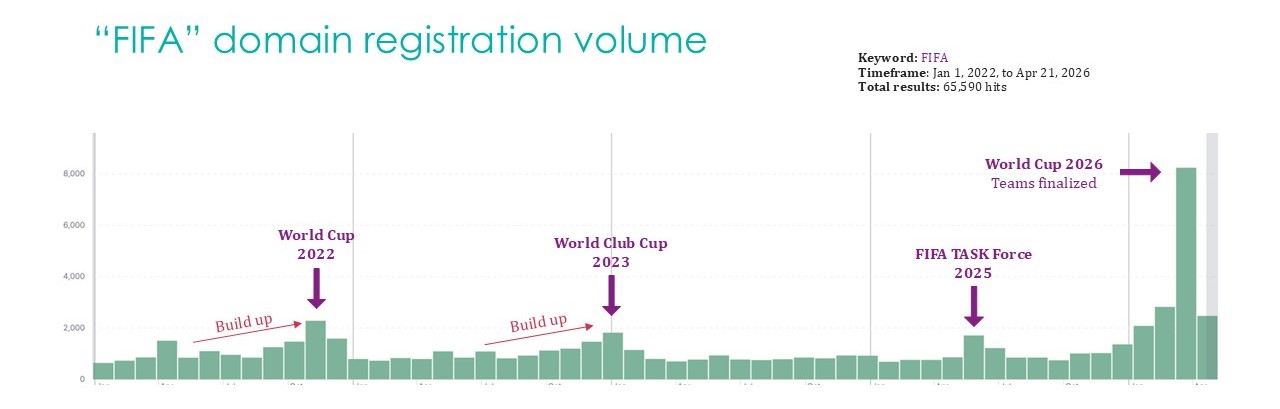
Looking at domain registrations containing the “FIFA” keyword over time, one trend stands out: Activity closely follows major milestones in FIFA’s event calendar.
Significant spikes occurred during:
- The 2022 World Cup in Qatar
- Preparatory phases for subsequent FIFA events, including the Club World Cup
- The current buildup to the 2026 tournament
Between January 1, 2022, and April 21, 2026, there were 65,590 third-party domain registrations related to the “FIFA” keyword. The biggest spike occurred on March 31, when FIFA confirmed the final World Cup teams. On that day alone, registrations reached their highest point in the dataset (1,412).
This demonstrates that while some domain registrations sometimes gradually increase, certain events trigger a high volume of third-party registrations on their own. As the final teams became known, interest in FIFA-related domains surged—likely reflecting both opportunistic registrations and the early preparation of potential campaigns that bad actors could use later for misleading, infringing, or fraudulent activity.
Registration activity is likely to remain elevated as the tournament gets closer. Additional moments—such as ticketing updates, travel planning, official promotions, sponsor campaigns, and the opening match in June—may drive more waves of domain activity.
FIFA tickets trends: lower volume, higher risk
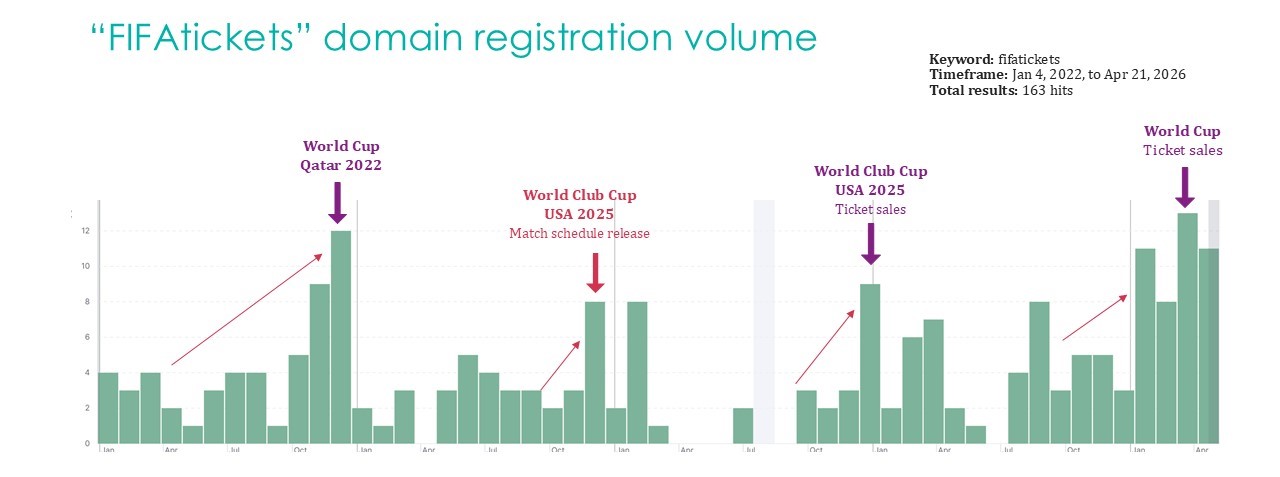
When narrowing the focus to domains containing “FIFA tickets,” the volume is significantly lower (163 total registrations), but the risk is much higher.
Registrations in this category also tend to spike around key moments, including match schedule announcements and ticket sales periods. Unlike broader “FIFA” keyword domains, these registrations are more directly tied to consumer intent. Fans searching for tickets often act with urgency, making them more vulnerable to misleading or deceptive websites.
As a result, even a relatively small number of domains can have an outsized impact. Many of these domains are designed to appear official or affiliated, increasing the likelihood that users will trust them. This makes ticket-related domains a common entry point for fraud, particularly as the event draws closer and demand intensifies.
From opportunistic registrations to active fraud
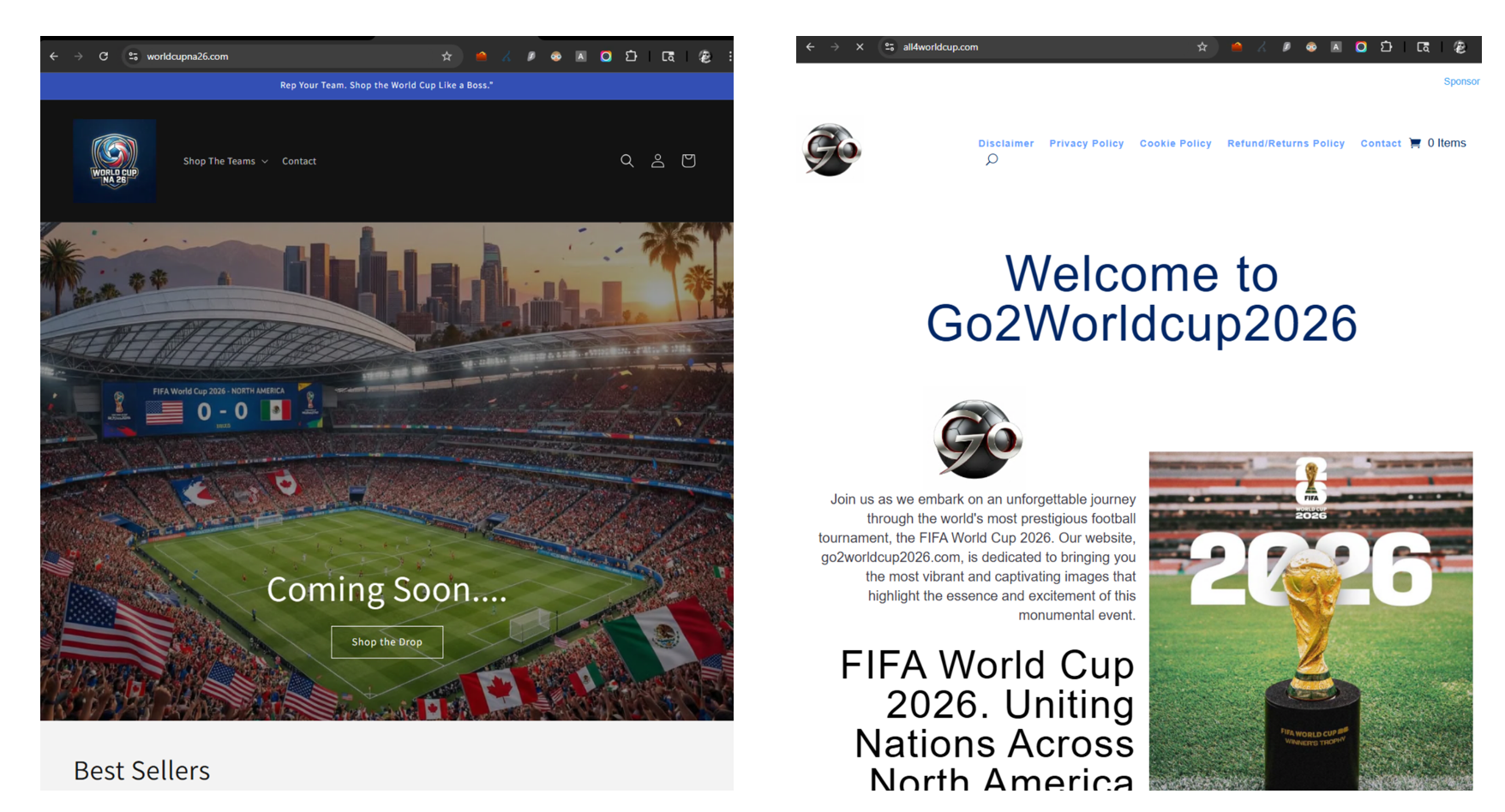
Not all third-party domain registrations are created equal. In general, they fall along a spectrum.
At one end are domains that may not be actively harmful but still raise concerns. Some are parked to redirect traffic to unrelated ads or generate revenue. Others use recognizable names or trademarks without authorization, creating brand infringement risks even if they aren’t yet tied to active fraud.
At the other end of the spectrum are more clearly malicious domains. In the case of FIFA-related registrations, we’ve already identified several types of fraud, including:
- Fake ticket sales platforms
- Travel and accommodation scams
- Fraudulent merchandise sites
- Streaming and media scams
- Giveaway and lottery schemes
These sites aim to capture personal or payment information. The domains often mimic official branding, language, and design elements to appear legitimate. In some cases, they’re activated quickly after registration; in others, they remain dormant until a key moment, such as the start of ticket sales.
What this means for businesses
While this analysis focuses on FIFA and the World Cup, the same pattern applies to any highly visible brand. Major events increase public attention—and create opportunities for third parties to register lookalike or keyword-based domains that can cause customer confusion, brand misuse, or direct financial harm.
Proactive domain monitoring helps organizations identify these registrations early, assess potential risk, and take action before third parties use suspicious domains against customers or partners. Solutions like CSC’s 3D Domain Security and Enforcement help organizations gain visibility into this activity and respond when needed.
Consult with an expert on how we can protect your business from fraudulent or infringing activity.